Levent Kenez/Stockholm
A coalition of United Nations special rapporteurs has publicly released a letter accusing the Turkish government of criminalizing young women and children in sweeping counterterrorism operations, a disclosure made only after Ankara failed to respond within the required 60-day window. The letter, published this week under UN procedure, details accusations that Turkey’s 2024 and 2025 raids relied on secret evidence, coerced interrogations and broad counterterrorism laws to punish ordinary, lawful behavior.
In the communication dated October 8, 2025, UN experts warn that two mass police operations, one on May 7, 2024, and another on May 6, 2025, reflect a persistent pattern of targeting women, university students and minors with no evidence of violent intent. The raids resulted in 55 detentions one year and 208 the next.
Many detainees were reportedly questioned over tutoring children, traveling abroad for Erasmus programs, using secure messaging apps or sharing apartments near campus. According to the rapporteurs, Turkish prosecutors reframed common student life as terrorism based on perceived ties to the Gülen, or Hizmet, movement, a group critical of Turkish President Recep Tayyip Erdogan.
The Erdogan government has been widely criticized for what observers describe as the unjust labeling of the Gülen movement, the civic network inspired by the late Turkish Islamic scholar Fethullah Gülen, as a terrorist organization. The government also holds the movement responsible for a coup attempt on July 15, 2016, although it has not been able to substantiate this claim to date.
The terrorist label was first announced in December 2013, shortly after Erdogan and several members of his family were implicated in two major corruption investigations involving Iranian sanctions-buster Reza Zarrab and former al-Qaeda financier Yasin al-Qadi. Both individuals were reported to have moved large sums of money through their close ties to figures within Erdogan’s circle.
No other country recognizes the Gülen movement as a terrorist entity, and the group has not been linked to acts of violence since its emergence in the 1960s under Gülen’s religious and educational influence.
The letter accuses Turkish authorities of relying on vague legislation, anonymous witnesses and intrusive surveillance, including wiretaps and physical monitoring of children, without individualized justification. The experts state that these measures bear no reasonable connection to legitimate counterterror aims and appear to punish students for their families’ political history or for ordinary social and academic activities.
Some of the most disturbing accounts involve the May 2024 raids in Istanbul, where 40 adults and 15 minors were taken into custody during pre-dawn police operations. Youngsters aged 13 to 17 were reportedly handcuffed, transported for medical examinations, interrogated without lawyers present and left without food for long periods of time. Families were informed only after the fact, and social workers present during questioning allegedly failed to intervene despite clear violations of child protection standards.
Court authorizations for months of surveillance were granted even for 12 and 16-year-olds, based solely on unverified claims from unnamed sources. Police classified students’ movements, tutoring sessions and routine meetings as terrorism-related behavior. Adults also detained in the same May 2024 police raid reported psychological pressure, deprivation of food and isolation from the outside world for four days.
A 529-page indictment filed in June 2024 cited no evidence of violence or organized structure. Instead, it portrayed voluntary tutoring, religious study groups and student gatherings as proof of extremist activity. Several defendants were minors at the time of the alleged conduct. In September 2025, 19 young women were convicted in what became widely known as the “girls trial” in the media.
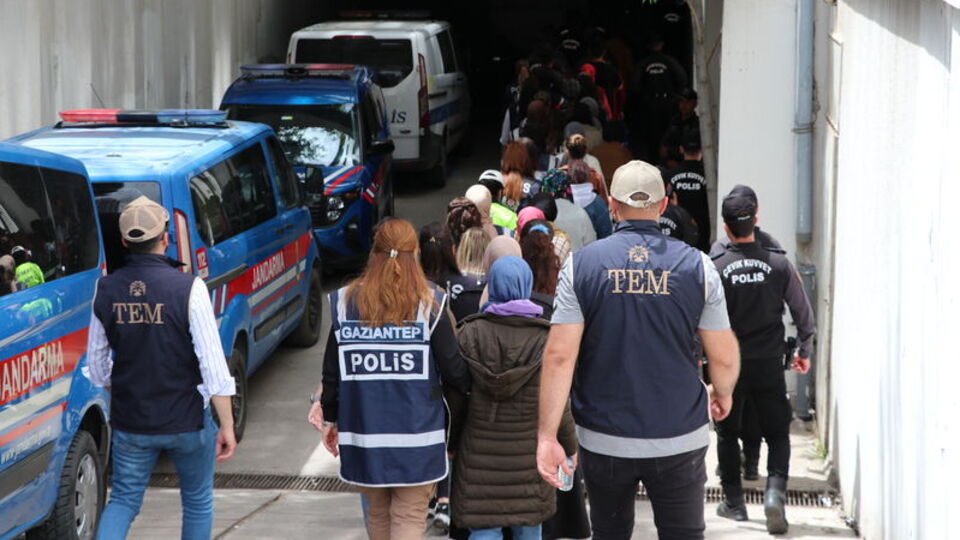
The second operation, carried out across 47 provinces in May 2025, resulted in the detention of more than 200 people. Turkish officials publicly shared photographs of handcuffed detainees before any judicial ruling, a move the UN experts say violated the presumption of innocence. Many detainees, again mostly young women and students, were interrogated about possessing passports, traveling abroad, sending rent money to roommates or having relatives previously prosecuted under anti-Gülen investigations.
The rapporteurs expressed serious concerns that the case relied heavily on the testimony of one anonymous witness and a USB drive whose origin and authenticity have not been verified. The file reportedly contained general audio discussions about student life abroad, yet prosecutors used it to justify arrest warrants across the country.
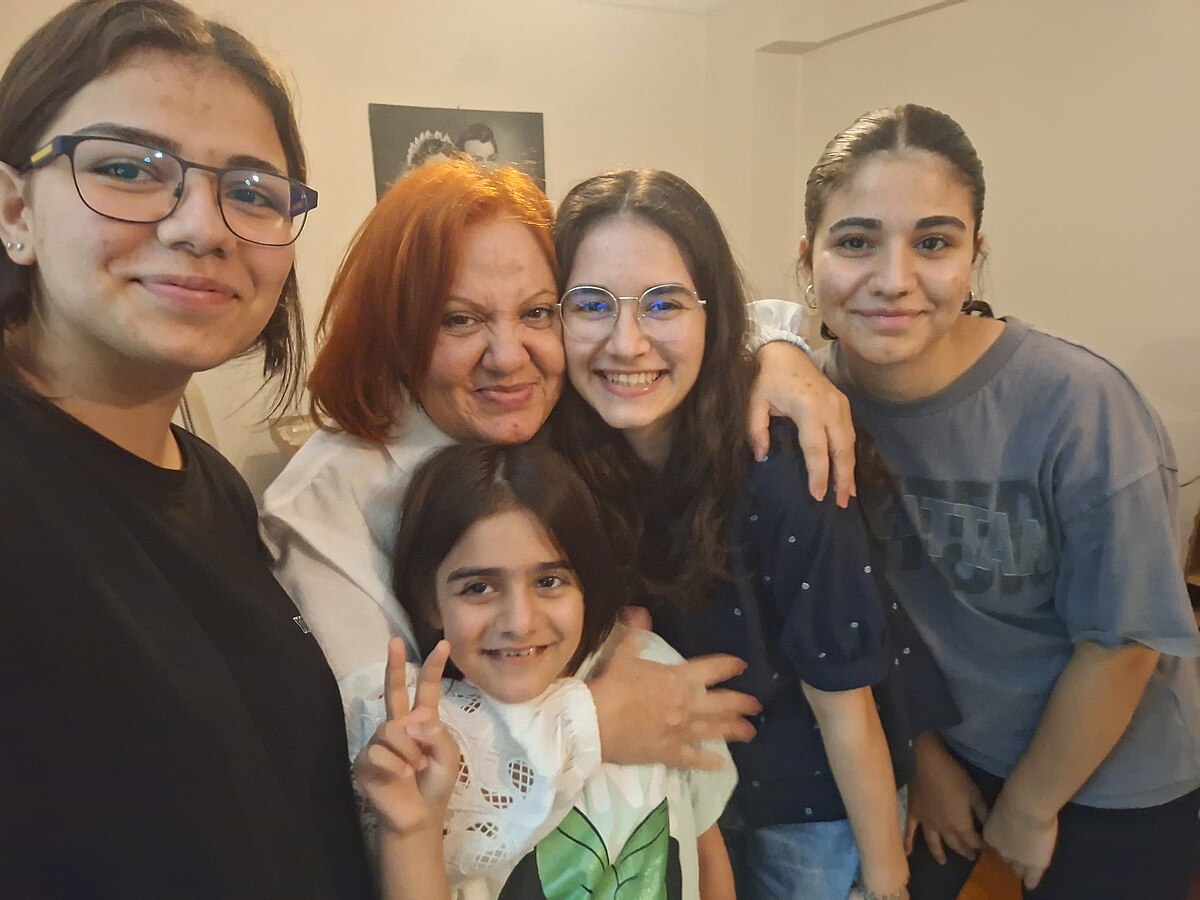
One case has drawn particular attention. Twenty-three-year-old psychology student Elif Degirmenci was arrested at dawn in her Ankara apartment. She was allegedly denied the chance to change clothes or bring her medication, forced to unlock her phone and transported more than 750 kilometers to Gaziantep, while her family received no information about her location for two days. Degirmenci, who suffers from a panic disorder and stress-induced skin reactions, was reportedly subjected to humiliating strip-searches, shouted at when she requested a lawyer and put in an overcrowded cell with both men and women.
She told the court she had traveled abroad for academic purposes. Prosecutors, however, portrayed her shared student apartment and travel dates coinciding with those of other students as signs of participation in an overseas training program. Despite having no criminal record, she spent nearly two months in pretrial detention and missed her final examinations and graduation ceremony. She was released in July 2025 but remains under a travel ban as her trial continues.
UN experts state that both operations show systemic violations of international law, including arbitrary detention, denial of access to legal counsel, failure to protect minors, discriminatory targeting of women and practices that may amount to torture or ill treatment. They warn that Turkey continues to misuse overly broad counterterrorism legislation, particularly Article 314 of the Penal Code, despite repeated rulings by the European Court of Human Rights (ECtHR) and UN bodies declaring such applications unlawful.
The rapporteurs also place the recent raids within the broader context of Turkey’s post-2016 crackdown, noting that more than 700,000 people have been investigated for alleged Gülen links and that UN bodies have issued at least two dozen decisions finding these detentions arbitrary. In the landmark 2023 Yalçınkaya judgment, the ECtHR found that convictions based solely on a messaging app violated core human rights protections. Ankara has failed to implement reforms addressing these concerns.
Since the Turkish government did not respond to the UN’s request for clarification, the letter has been published in full. Under UN rules, such publication occurs only when a state refuses to engage with the allegations.
In their concluding remarks, the UN experts call on Turkey to end practices that criminalize peaceful academic, religious and social activity, to stop the surveillance and coercive questioning of minors and to review counterterrorism laws that allow guilt by association.