Abdullah Bozkurt/Stockholm
The systematic dismantling of Turkey’s law enforcement agencies, intelligence services and judiciary over the past decade — carried out through mass purges, the appointment of partisan loyalists with no regard for merit and widespread corruption reaching the highest levels of political power under President Recep Tayyip Erdogan and his far-right Nationalist Movement Party (MHP) allies — together with poor management of the faltering economy has created the perfect environment for a new generation of mafia networks to grow.
These state-enabled criminal structures now pose a growing security threat far beyond Turkey’s borders, especially in Europe, where a new generation of Turkish gangs involved in a wide range of criminal activities, including drug trafficking, money laundering, extortion and arms smuggling, has exported its turf wars alongside its expanding criminal enterprises, as recent murders and police operations targeting Turkish gang members across Europe have clearly demonstrated.
These groups, fueled by soaring youth unemployment, the erosion of the rule of law and an increasingly authoritarian climate in which the Erdogan government focuses on suppressing legitimate opposition rather than combating crime, have flourished amid collapsing career prospects for millions of young people who are trapped in a system of governance defined by deeply entrenched nepotism and an economy weakened by persistent mismanagement.
As a result, they have spilled into Europe. In recent years, Spain has emerged as an unprecedented staging ground for these Turkish gangs, which are now exporting their internal feuds, targeted killings and organized-crime operations into Spanish territory.
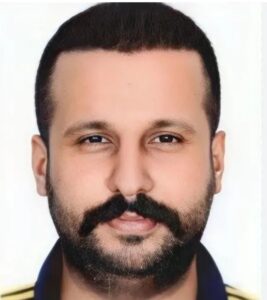
Spanish police, already accustomed to dealing with British, Russian, Balkan and North African criminal organizations, now find themselves confronting something new: transnational Turkish gangs that operate like armed paramilitary factions.
These groups, led by young figures who built their reputations on social media such as TikTok, Instagram and Telegram, move quickly across borders, carry military-grade weapons and bring with them violent rivalries rooted in the institutional disintegration of Turkey’s own security environment.
The transformation of Turkey’s criminal underworld began after 2013, when the ruling Justice and Development Party (AKP) government survived major corruption investigations that implicated members of then-prime minister Erdogan’s family and inner circle, including figures linked to an Iranian sanctions buster and a former Saudi financier of al Qaeda. It accelerated after a 2016 false flag coup attempt, when a sweeping political purge dismantled large parts of the police, intelligence services and judiciary, removing many veteran officials with a large amount of experience in confronting criminal and terrorist networks in Turkey.
Tens of thousands of officers, prosecutors, judges and analysts were dismissed or imprisoned and, in many cases, replaced by ruling party loyalists who often lacked training, experience or independence. Many individuals previously removed from law enforcement and the judiciary for their links to organized crime were later brought back and put in key positions overseeing the country’s police and courts.
This hollowing-out of state institutions created a security vacuum that criminal entrepreneurs quickly exploited. Turkey’s political leadership, increasingly embroiled in corruption scandals and patronage networks, relied on informal enforcement groups and tolerated armed gangs as long as they aligned with the ruling party’s interests. Some, such as convicted and notorious mafia bosses Alaaddin Çakıcı and Sedat Peker, were even enlisted as allies by the Erdogan government to deepen the climate of fear among the opposition, consolidate political power and suppress critical and independent voices.
At the same time, millions of unemployed or underemployed young men with severely reduced social mobility found in these gangs a substitute for economic security, social identity and power. The government’s quiet alliance with traditional organized crime syndicates, together with the open praise of notorious criminals by Turkish officials and the deepening economic crisis, have created the perfect environment for a new generation of criminal organizations to flourish and establish themselves as influential new actors, particularly among marginalized Kurdish youth.
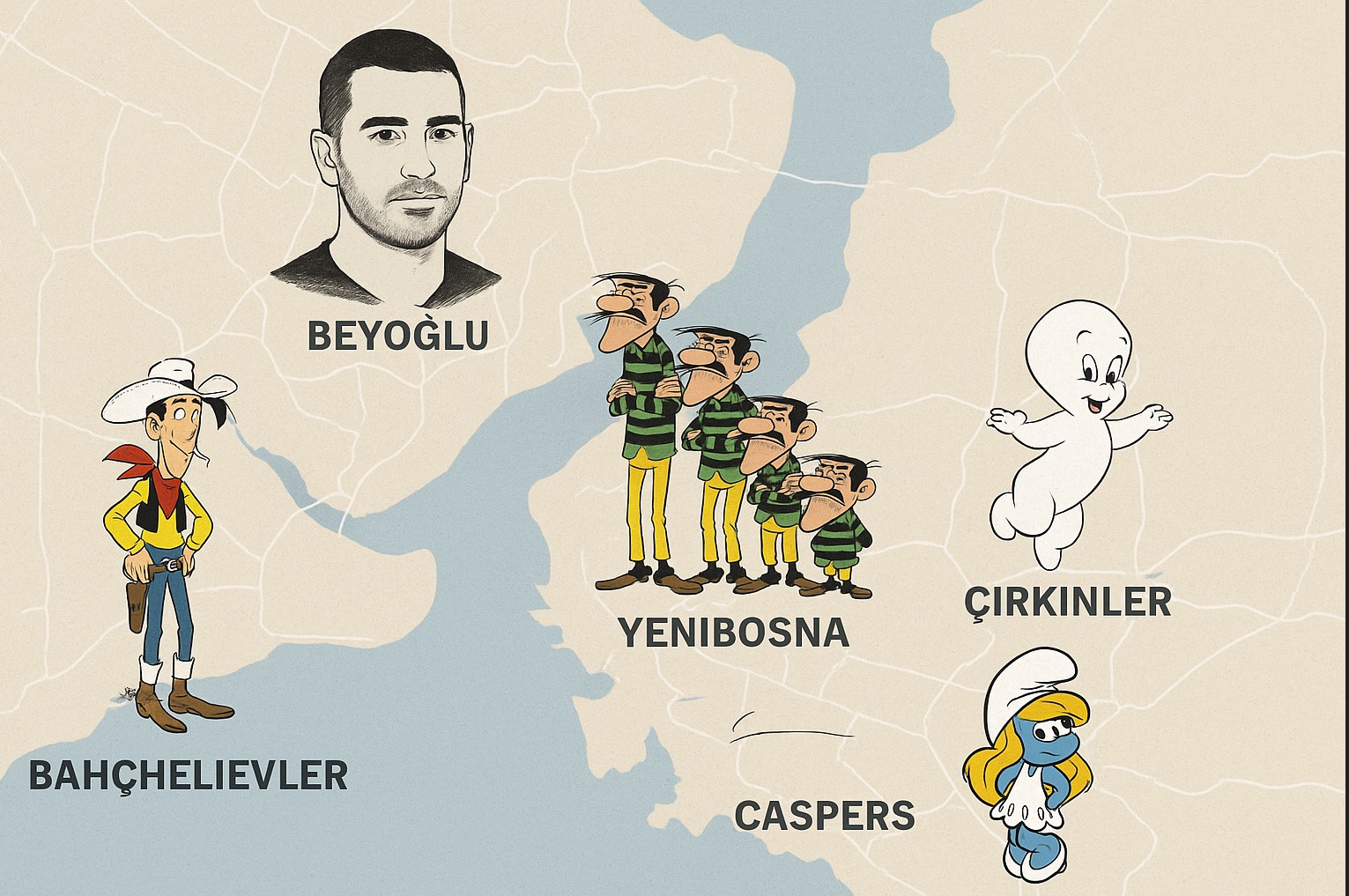
The result was the rapid rise of loosely organized yet extremely violent clans. Named after cartoon characters such as the Daltons (Daltonlar), the Caspers (Casperlar), Lucky Luke (Red Kits) and the Smurfettes (Çirkinler), these flexible but ruthless groups have become central players in a surge of contract killings, extortion, armed clashes and drug trafficking, with many of their leaders directing operations from abroad. They routinely flaunt weapons online, recruit teenage hitmen and broadcast threats against rival clans to audiences of millions.
The earliest and most notorious of the new generation is the Barış Boyun Group, which formed in Istanbul’s Beyoğlu–Kasımpaşa district. Boyun, now jailed in Italy, commands one of the largest and most violent networks, known for carrying out murders on behalf of other international criminal syndicates.
For example, the group was behind the murder of Serbian mob boss Jovan Vukotić, leader of the feared Škaljari cartel, who was gunned down by a motorcycle hit squad in Istanbul in September 2022. According to the Turkish indictment, the contract for his assassination was reportedly worth 1.5 million euros. Boyun, who claims to be Kurdish and Alevi, is currently fighting an extradition battle in Italy in response to Turkish requests and is also facing separate charges from Italian prosecutors over his criminal activities in the country.
A recent indictment filed earlier this month against the criminal group in Istanbul revealed that it has been using 40 minors aged 15–18 as hitmen in extortion attempts. Several are Syrian and Azerbaijani teenagers brought to Istanbul and pushed into shootings through promises of money or threats of death. Girls were also used to record attacks and lure victims. Prosecutors say the gang targets vulnerable youngstersfacing poverty or family issues, trapping them with threats, sex and drugs, and creating a growing network of teenage gunmen across the city.
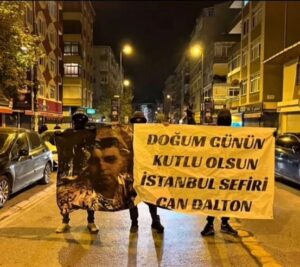
Another emblematic group is the Daltons, named after the cartoon bandits from the American Wild West. The gang emerged in Istanbul’s Yenibosna district and is led by Berat Can Gökdemir, a Kurd from Batman province who operates primarily in Istanbul. His indictment lists charges including gang leadership, armed threats, extortion, murder and incitement. Gökdemir had originally worked with Boyun, but the two leaders later split after a dispute. He is currently believed to be in Russia.
The group was involved in a shooting attack on the Iraqi Consulate in Istanbul’s Şişli district in March 2025, carried out in retaliation for the arrest of senior gang member Ahmet Mustafa Timo, known as “Timocan,” in Iraq and his subsequent transfer to Turkey.
Group member Sinan Memi was arrested in Warsaw on September 20, 2024, and extradited to Turkey for his role in multiple violent crimes. Another member, Atakan Avcı, who had been sentenced to 30 years for drug trafficking, was captured in Sofia and returned to Turkey on November 2, 2024. In May 2025 the Daltons were also reported to be responsible for an armed attack on Greek intelligence officers in Thessaloniki during a surveillance operation. Greek authorities later detained six Turkish nationals and seized a cache of weapons linked to the group.
In September 2023, six members of the Boyun crime network were gunned down execution style in the Artemida suburb of Athens, an attack widely believed to have been carried out by either the Daltons or the Red Kits gang.
Ferhat Delen, another Kurd from Mardin province, leads the Red Kits and became embroiled in a violent struggle for control of Fenerbahçe’s prominent supporter groups. What began as a football fan network evolved into a gang notorious for fierce rivalries and violent clashes with other factions of the same team, eventually expanding its street influence well beyond the stadium terraces. Delen’s faction is accused of orchestrating shootings targeting fan leaders Cem Gölbaşı and İbrahim Gümüş, both of whom survived assassination attempts. Delen is currently wanted by authorities and is believed to be hiding in Greece.

The Caspers, one of the fastest growing groups, attracted national attention after a dramatic overnight attack last year outside a hospital in Bahçelievler. Their members opened fire on the building while searching for a wounded rival, injuring a police officer, two gendarmes, a security guard and a civilian. The assault came shortly after a deadly clash with the Daltons in which two Casper members were killed. The group is led by İsmail Atız, known as Hamuş, another Kurd from Mardin. He was arrested in Germany in July but later released, and was subsequently detained again in Italy.
The Ayverdi Group, another new-generation mafia network led by Emrah Ayverdi, has been locked in a brutal years-long feud with the Barış Boyun organization. The Boyun faction has allegedly attempted multiple assassinations, including a grenade attack on a wedding hall in Istanbul’s Eyüp district last year. Ayverdi has so far survived every attempt on his life.
Some groups are built on blood ties rather than cartoon-themed identities. The Bayrolar clan is led by four brothers, most of whom are now abroad. Their activities came into focus after a shooting at a political event in Küçükçekmece. An indictment was filed against two of the brothers, Bayram and Feyzi Eminanç, in connection with the incident.
The Bayğaralar, led by fugitive Ramazan Bayğara, have been linked to two high-profile murders, including the killing of a high school vice principal in Tuzla, allegedly carried out as revenge for a decades-old homicide involving their family. The group is accused of crimes including forming a criminal network, murder, attempted murder, drug trafficking, armed threats, property damage and aggravated extortion. Bayğara is believed to be under arrest in Greece.
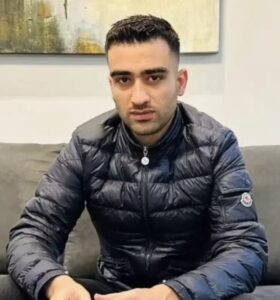
Unlike Turkey’s older mafia structures, these groups are made up largely of teenagers between 14 and 17 and men in their early twenties, most of them from Istanbul’s poorest neighborhoods and predominantly of Kurdish background. They are drawn into crime through poverty, social exclusion and aggressive online recruitment on social media, where weapons, money and violence are glamorized.
Although many of the leaders have fled abroad, they continue to direct their operations from overseas, with several killings in Europe and in neighboring Georgia already attributed to these networks.
Spain has emerged as a particularly significant target for these young Turkish mafia groups. The spillover of their internal conflicts into Spanish territory accelerated in 2024 and 2025, as gang members fled Turkey to escape assassination attempts or chased rivals across Europe. With its combination of high mobility, dense tourist traffic and long-established criminal corridors, Spain quickly became a preferred operating environment for these networks.
The first major incident that exposed the depth of the Turkish presence in Spain occurred on August 3, 2025, in Torrevieja, Alicante, where Caner Koçer, a leading figure in the Dalton clan, was shot dead, allegedly by rival gang the Caspers in a bid to undermine the leadership structure of the Daltons and disrupt their operations in Europe. Spanish police captured three suspects, including Burak Bulut, a senior figure in the Casper gang who reportedly entered Spain using a stolen car from France a few days before the killing.
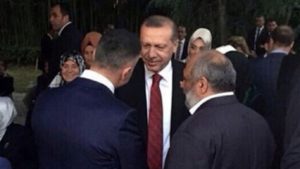
Subsequent investigations revealed that both clans had quietly established logistical footholds along Spain’s Mediterranean coast from Alicante to Málaga, using short-term rentals, vehicles with foreign plates and transit routes through France and the Netherlands to move personnel and weapons.
The conflict escalated weeks later when Spanish officers intercepted a stolen vehicle with French plates carrying Kalashnikov-type assault rifles near Torrevieja on October 31, 2025. The weapons belonged to Mensur Gümüş, leader of the Çirkinler faction. A subsequent raid on a nearby residence led to the arrest of Gümüş and two armed associates.
The group had allegedly entered Spain to coordinate retaliation for Koçer’s killing, highlighting the degree to which Spanish territory had become embedded in the Turkish criminal conflict. The weapons cache, combined with intelligence pointing to planned attacks, underscored that Spain was no longer merely a refuge. It was a forward operating base for transnational Turkish gang warfare.
Several structural factors have made Spain an appealing staging ground for Turkish mafia networks, allowing them to expand operations with minimal scrutiny. Spanish law enforcement attention is often focused on long-entrenched British, Irish, Balkan and Russian crime groups, giving Turkish gangs a comparatively low profile as they move into the scene.
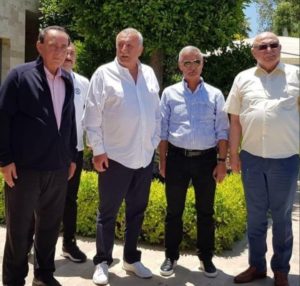
The country’s Schengen mobility, dense tourist zones and abundance of short-term rentals provide anonymity and quick turnover for operatives, while regions such as the Costa del Sol and Alicante offer a ready-made criminal ecosystem built around smuggling, money laundering and illegal firearms trafficking.
Direct air links with Istanbul and seamless road travel across the Schengen area further facilitate rapid movement of personnel and weapons. Together, these conditions allow Turkish clans to execute targeted killings, coordinate gang activity, carry out intimidation campaigns and move arms with little disruption.
The presence of new-breed Turkish gangs in Europe illustrates a larger trend: the export of Turkey’s internal state decline to the European security environment. With law enforcement institutions in Turkey compromised and criminal factions emboldened, violence that once took place in Istanbul or Ankara is now unfolding on the streets of Europe.
European law enforcement agencies now face the challenge of confronting highly mobile, heavily armed and digitally coordinated Turkish gangs shaped by a decade of institutional decay in their home country. These groups not only represent a new criminal threat but also are a symptom of how the breakdown of state capacity in Turkey has produced security externalities across Europe.