Abdullah Bozkurt/Stockholm
Turkey’s Islamist President Recep Tayyip Erdoğan, who recently announced his desire to help the Taliban govern by maintaining troops in Afghanistan and drew a parallel to the Turkish military presence in Libya, will most likely rely on a three-year-old bilateral strategic partnership agreement to flesh out his remarks.
The deal, officially titled the Strategic Partnership and Friendship Agreement, is a framework agreement that allows Turkey’s involvement in Afghanistan in a number of ways and by various means including cooperation on security. Erdoğan can discreetly strike multiple agreements with the Taliban without presenting any of them to parliament for approval, claiming that all is being done under the already approved framework deal.
The existing agreement, approved by the Turkish parliament in April 2018, would be enough to open the door similar to Turkey’s agreement with Libya, which paved the way for the deployment of Turkish troops under the pretext of consultancy to help Libyan factions endorsed by Turkey. Erdoğan expanded cooperation with Libya with a new military deal and shipped more troops as the conflict continued in its later stages.
In an interview on Turkish TV on August 18 Erdoğan openly entertained the idea of maintaining Turkish troops in Afghanistan under Taliban rule and said, “Turkey’s military presence in Afghanistan will strengthen its new administration in the international arena and will also facilitate its work.” Then he suddenly invoked the Libyan example and added: “The main point is to reach an understanding with the Afghan authorities. For example, we can achieve this with a bilateral agreement like we did in Libya.”
The Turkish president’s interview on a national TV network in which he gave Libya as an example for maintaining Turkish troops in Afghanistan:
President Erdoğan, who earlier said he shares a similar ideology with the Taliban, so far has a receptive audience with the Taliban, which described Turkey as an allied Islamic country under Erdoğan’s leadership and hoped to secure assistance in all fields. Turkish officials’ talks with the Taliban have been going on for some time, and Erdoğan said he is ready to host Taliban leaders personally as well.
Speaking on July 20 Erdoğan said his government would negotiate with the Taliban, whom he said should feel comfortable talking with Turkey, as opposed to the Americans. He justified this by stating that “Turkey has nothing against the Taliban’s ideology, and since we aren’t in conflict with the Taliban’s beliefs, I believe we can better discuss and agree with them on issues.”
If Erdoğan is bent on following the Libyan example in Afghanistan by maintaining and deploying further military troops and resources, the first step is to make use of existing agreements and later expand on them with broader and more specific deals with the Taliban. In Libya, Turkey first made use of a 2012 cooperation agreement to send intelligence and military officers, followed by a revised and more comprehensive military deal to boost the Turkish military and defense industry presence in the North African country.
Appearing on the state-run TRT on December 9, 2019, Erdoğan made reference to the agreement in a bid to justify sending Turkish troops to Libya. He later fast-tracked a new military deal with the Tripoli-based UN-backed Government of National Accord under the leadership of Fayez al-Sarraj. The deal strengthened Tripoli against the Tobruk-based Libyan National Army (LNA) under the command of Gen. Khalifa Haftar.
The strategic agreement with Afghanistan would provide a justification for President Erdoğan in the face of mounting domestic opposition and help him ward off criticism for keeping Turkish soldiers in the war-torn country with an unknown future.
Confidential Turkish General Staff document that lists the troops deployed in Afghanistan:
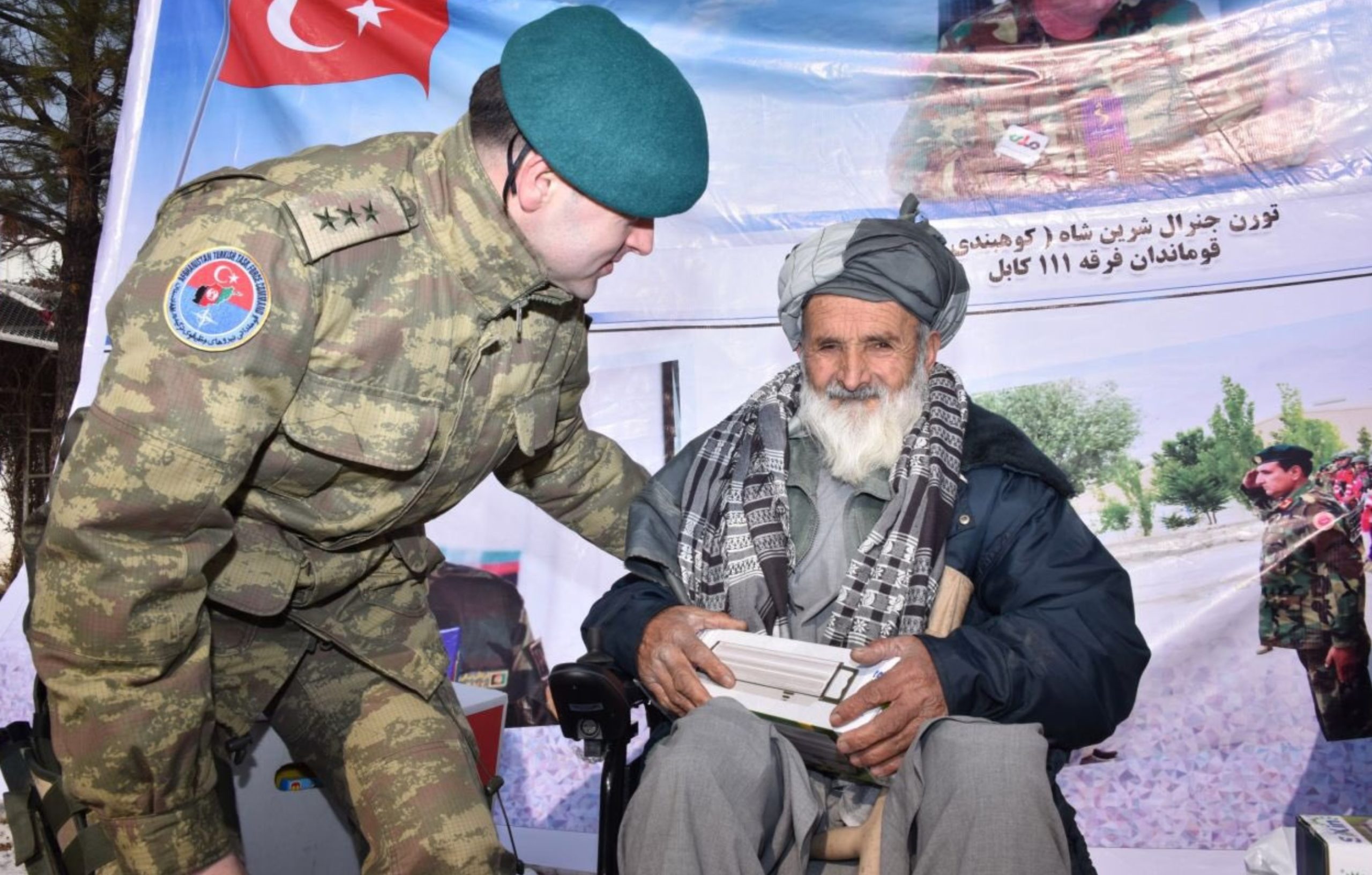
According to confidential Turkish military documents obtained by Nordic Monitor, Turkey had 759 troops in Afghanistan in 2016: three generals, 265 officers of various ranks, 204 noncommissioned officers, 278 privates, and nine civilian employees. The number, although fluctuating over the years, is believed to be roughly the same today. The international airport in Kabul has for some time been under the control of Turkish troops as part of a NATO mission deployment, and Turkey has expressed its desire to maintain the status quo under Taliban rule as well.
Of course Erdoğan’s plans depend on the Taliban’s positive approach and whether they will comply with existing agreements or be open to new deals. So far what Erdoğan hears from the Taliban leadership appears to be mostly positive. Turkish Foreign Minister Mevlüt Çavuşoğlu expressed satisfaction with recent remarks from the Taliban concerning Turkey.
A Taliban spokesman said on Turkish TV network A Haber, owned by President Erdoğan’s family, that they considered Muslim Turkey an ally:
The strategic agreement stands out from other agreements Turkey has with Afghanistan when it comes to possible military and defense industry cooperation with the Taliban. Article 2 of the agreement mentions cooperation through competent authorities in security without defining who those competent authorities are. The vagueness in the wording paves the way for the engagement of the Turkish military, intelligence, law enforcement and state-run defense contractors in Afghanistan. The article specifically talks about training, experience sharing, information sharing, personnel exchanges and grants.
Turkish officials resumed drafting implementation agreements immediately after the strategic framework agreement was signed, according to Foreign Ministry Deputy Undersecretary Ümit Yalçın, who briefed lawmakers on the Foreign Affairs Committee in parliament on December 16, 2015. He said the interior and defense ministries were pursuing talks with Afghan officials on ways to implement the security section of the framework agreement. “Sub-agreements will be made on fleshing out this [framework] agreement, and the talks on that are already underway,” he said.
The strategic framework agreement between Turkey and Afghanistan:
Article 15 of the agreement envisages amendments by mutual consent. No third party dispute mechanisms were considered in sorting out possible problems. “Any dispute arising out of the interpretation or application of this Agreement shall be settled amicably by negotiations by the Parties through diplomatic channels,” says Article 16.
The agreement is valid for 10 years will be renewed automatically for another 10 years unless one of the parties decides to terminate it.
The agreement was signed by President Erdoğan and Ashraf Ghani, the then-Afghan president, on October 18, 2014 in Kabul. The agreement was approved in parliament on April 5, 2018 and became law after its publication in the Official Gazette on April 25.